
Have you ever picked up groceries, hauled them home and then realized you already had double or triples of some items and nowhere to place them? Or gone to your pantry in the middle of making a recipe, only to find that one ingredient you need is missing?
If you want to stop wasting money at the grocery store, wasting good food and wasting time running out for “just one thing” then this tip might be exactly what you need.
First of all, families and individuals don’t need the same food on hand. Your family size, background, favorite foods, and frequency of cooking at home all play a part.
So instead of giving you MY list of foods I keep on hand, I want you to create your own. There are plenty of Pantry Printables out there on the internet, but I have never found one I love so I just use Excel.
Second, there’s no one formula for the perfect amount of food to keep on hand, which likely depends on your space, preferences and budget. Feel free to set some goals and work toward them over time.
This is not about achieving a certain aesthetic, but if that’s your jam, go for it!
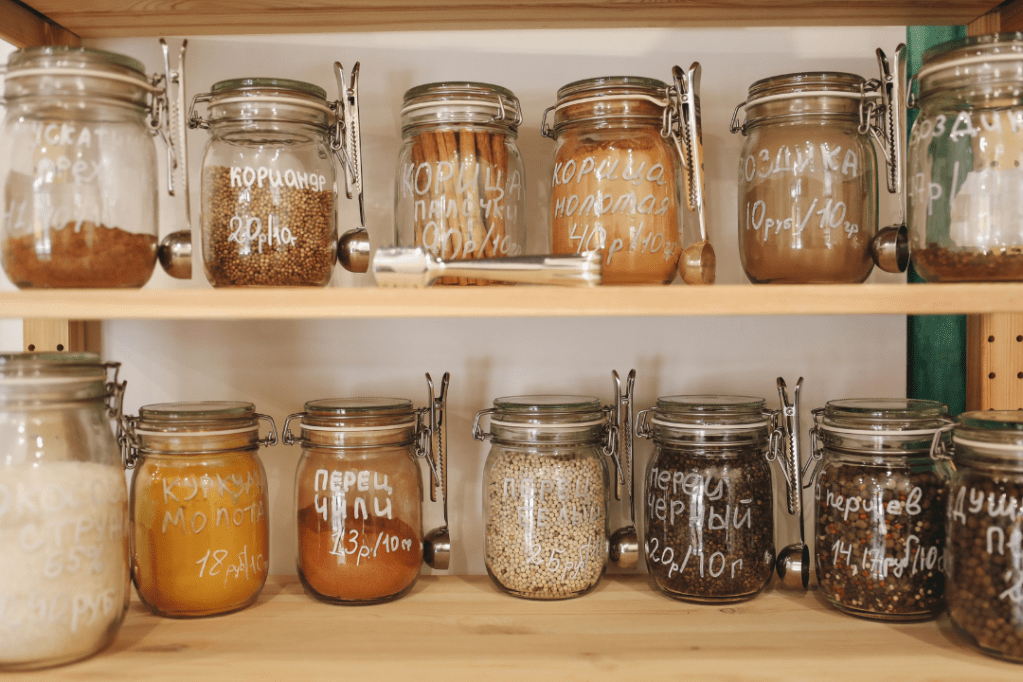
To start, grab some spare paper or your computer/tablet and head to the kitchen. Starting with your fridge and freezer, then moving to your pantry, write down all the food you have on hand + the amount if you wish.
Your list may start out as a jumble, and that’s okay.
- milk, 1 gal
- creamer
- tortillas
- strawberry jam
- lime juice
- yogurt
- eggs
- chicken breasts
After you get everything written down (and bad food thrown out!), you can sort into categories if you wish. Mine for the fridge are:
- Dairy
- Breads
- Meat
- Vegetables
- Fruit
- Sauces
- Dressings
- Misc
Continue working through your kitchen, tallying up what’s in your freezer, any deep freezer, spice cabinet, pantry and snack drawers.
| Tip! If you don’t already have an idea what’s for dinner the next few nights, consider making a plan based on what’s already in your fridge or freezer. Leftover Night is a great way to eat up small bits of previous meals and use up ingredients. |
Once you’ve written down everything you have on hand, consider anything you’re low on or need to replace entirely. Other family members might have their own “essentials” that they want to add.
When my list is complete I add it to Excel, creating categories as I go. To make it simple, I use tabs for each of my areas:
- Spices
- Freezer
- Canned Goods
- Pantry
- Fridge
If you are tracking quantities, consider adding 2 columns next to the item, for Qty and Goal (aka how many you have and how many you want to have). It might feel silly until you go to make your famous cinnamon rolls which require 6 sticks of butter and find that you have 2.
The bulk of the time is honestly in making your list, after that it’s easy to print out or copy the doc in your computer. I’ve yet to find a decent kitchen inventory app I like but I live in hope.
When I’m planning a big shopping trip I will review the latest inventory for things I am out of and then the rest of my list comes from menu planning with items I don’t have at home.
| Tip! If you have too much of something thanks to over buying, consider making a “do not buy” list to reference. This allows you to catch up on consuming these goods before you buy more and leaves space for the food you buy. |


